Governance Central
How governance moves, and where it stops
Rules, money and reform travel through institutions. The people at the end of the channel are where they arrive last, if at all. This page sets out the rules we use to predict that movement, and the working papers that test them.
Interactive maps
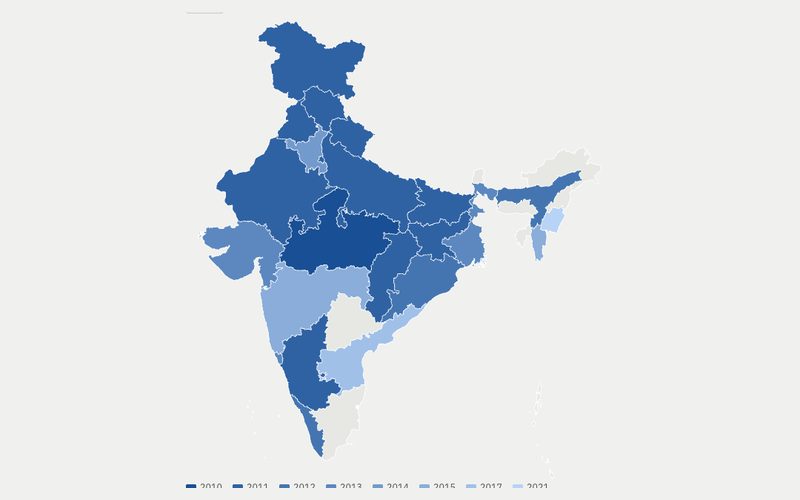 How reforms cross state linesRight-to-services laws, natural farming and UPI, state by state
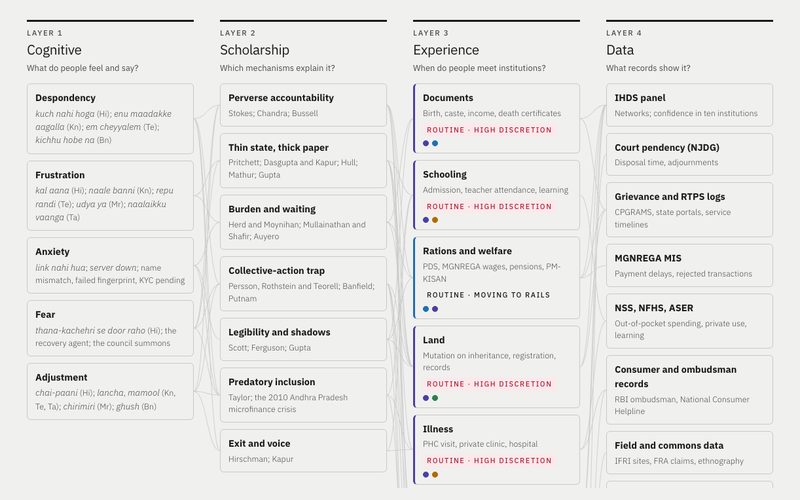 Map of Maps of GovernanceHow people feel, what explains it, what they meet and what records show, layer by layer
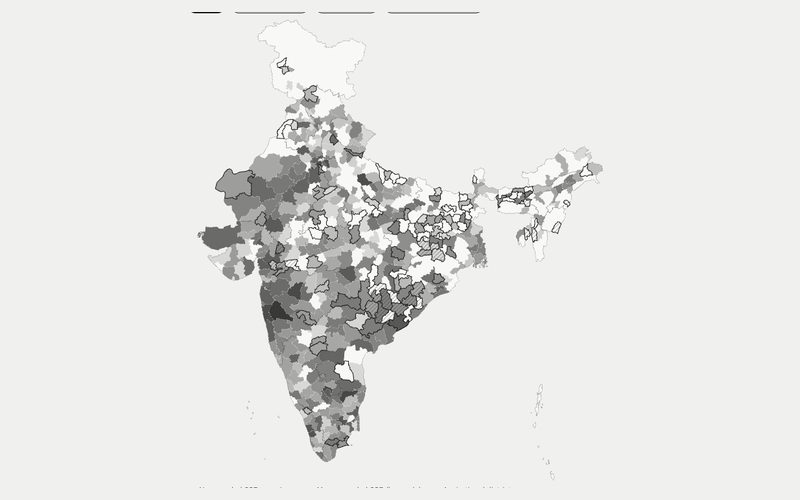 Where CSR landsWhere India's largest companies recorded their CSR spending
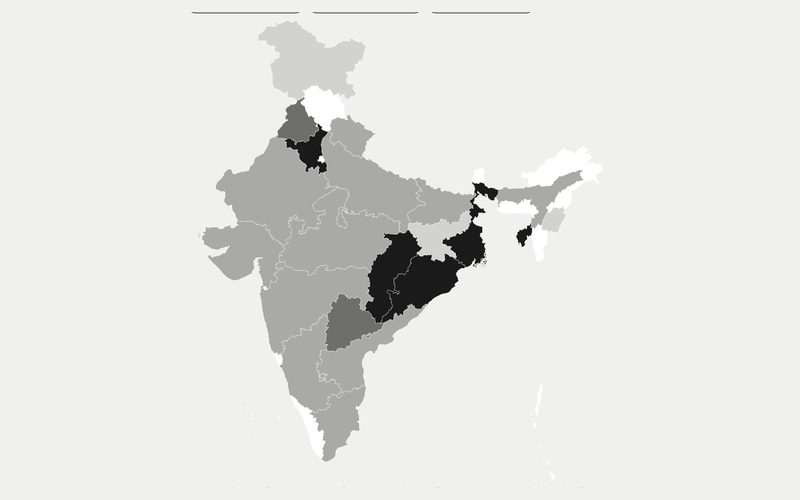 The tail inside the averageFarm-policy verdicts by state, down to the smallest farms
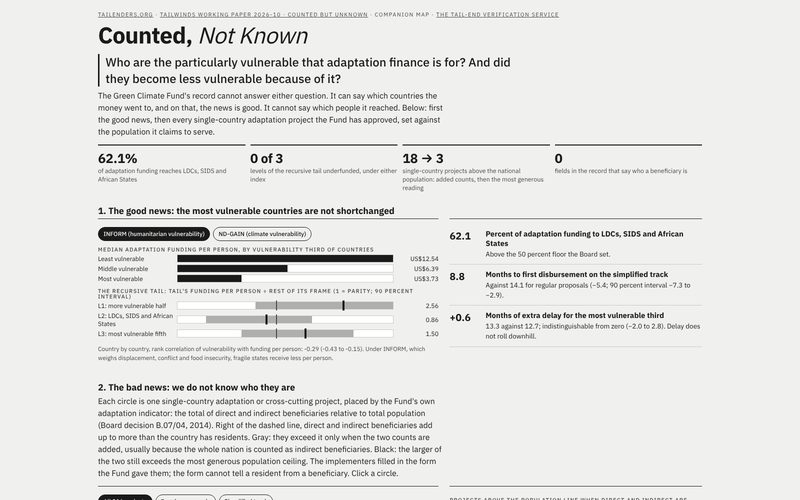 Counted but unknownGreen Climate Fund adaptation projects against the population each claims to serve
Seven rules of propagation
Success spreads along platforms; failure spreads along hierarchies and networks
- Downhill. A failure is absorbed by whoever has the least capacity to exit, so delay flows down to tailenders.
- Exit cascade. When the cost of exit falls below a threshold, the most vocal users leave; quality falls; more leave.
- Broker. Brokers earn from failure, so a fix that bypasses them meets resistance, and discretion moves to the next chokepoint.
- Fear symmetry. Vigilance pressure on officials raises deferral, which citizens feel as delay.
- Islands. Success holds where a task is converted out of the routine, high-discretion cell: run as a campaign, or put on digital rails.
- Neighbor. Reform crosses state borders by imitation where states carry the program, and stops at them where they do not.
- Threshold. Reform starts only when a shock exceeds what adjustment can absorb, usually a mass-casualty event.
From The Talisman Test (Tailwinds 2026-02).
Working papers
Tailwinds
- Tailwinds: How governance and grievance change moves across India, and how to forecast it (2026-01)
- The Talisman Test (2026-02)
- Where, but not who (2026-03)
- The tail inside the average (2026-04)
- Whose Rules? Which Forest? (2026-05)
- Harm Hides Where Measurement Ends (2026-06)
- Forever, Unlimited (2026-07)
- Unknown and Undrinkable? (2026-08)
- Permitted Does Not Imply Safe (2026-09)
- Counted but Unknown (2026-10)
- The fast lane and the long chain (2026-11)
Coming next
In preparation
An interactive map of institutions and people: global funds, treaties and states, through intermediaries, to the households at the tail, with the evidence for every link. And adaptation finance, read for whom it reaches inside countries.
Page last reviewed 15 October 2026.
- Ramprasad, V. 2026. The Talisman Test. Tailwinds Working Paper 2026-02, Tailenders Analytics. doi:10.5281/zenodo.23117021.