Interactive maps
See where it lands
Every interactive map on tailenders.org, in one place. Each one names its data and the status of every figure, and all of them are free to use and share under CC BY 4.0, with credit and a link.
Maps
Pesticides
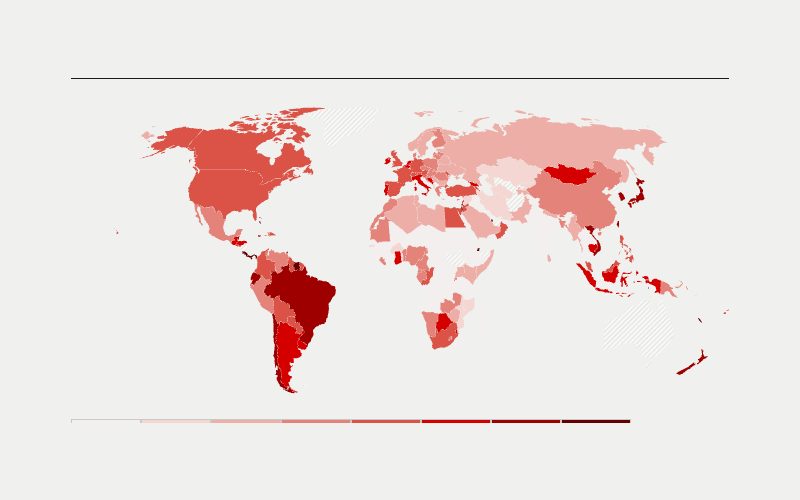 Pesticide use, country by country
How much pesticide each country uses, 1990 to 2023: per hectare of cropland, per person and in total, with insecticides separately, and whether each figure is official or estimated.
Data: FAO, FAOSTAT Pesticides Use (CC BY 4.0)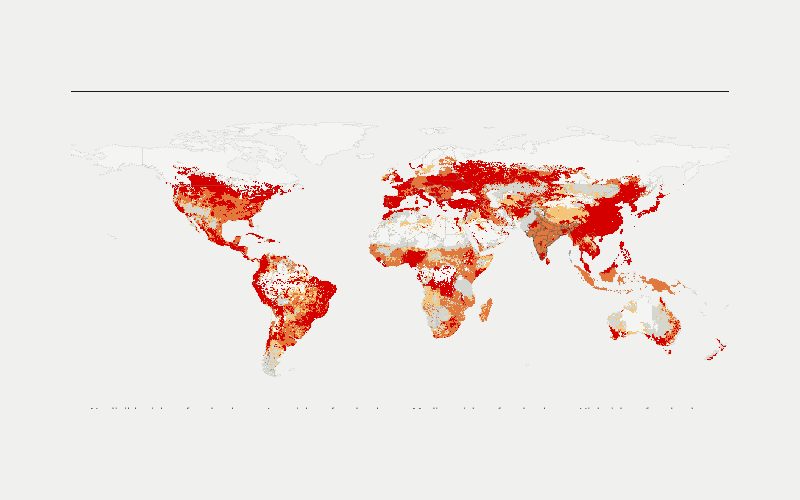 Where farmland is at risk, and who lives there
The risk that pesticide residues on farmland exceed safe levels for other species, worldwide at about 10 km, with the number of people living in those places and a view of pesticides reaching rivers.
Data: Tang et al. 2021, Nature Geoscience; JRC GHS-POP 2020; Maggi et al. 2023, Nature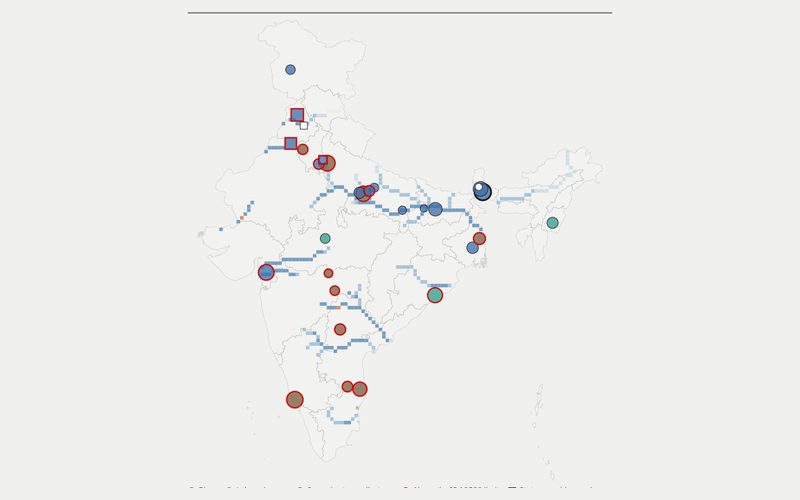 Pesticides in India's waters
Three records of the same water on one map: rivers as a global model sees them, what scientists measured, and what the state's own record shows, each against India's drinking-water limit.
Data: Published studies and official records, each read in the originalMaps
Governance
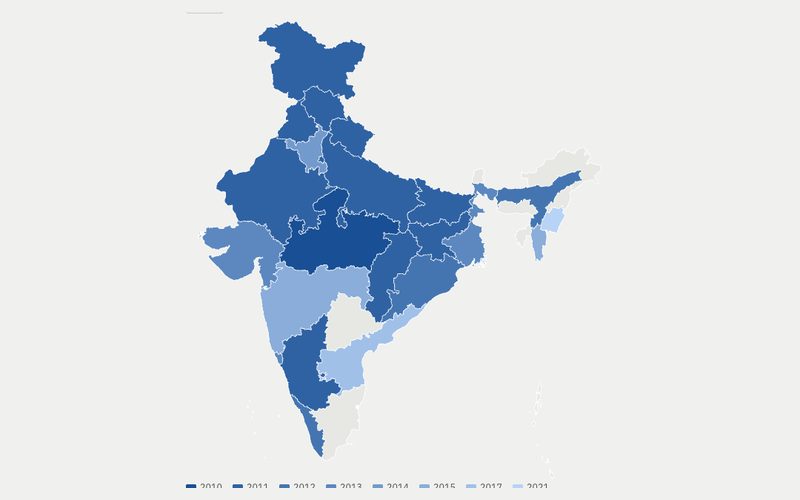 How reforms cross state lines
How right-to-services laws, natural farming and UPI spread across India's states: as a front, as a wave, or both.
Data: Tailwinds Working Paper 2026-01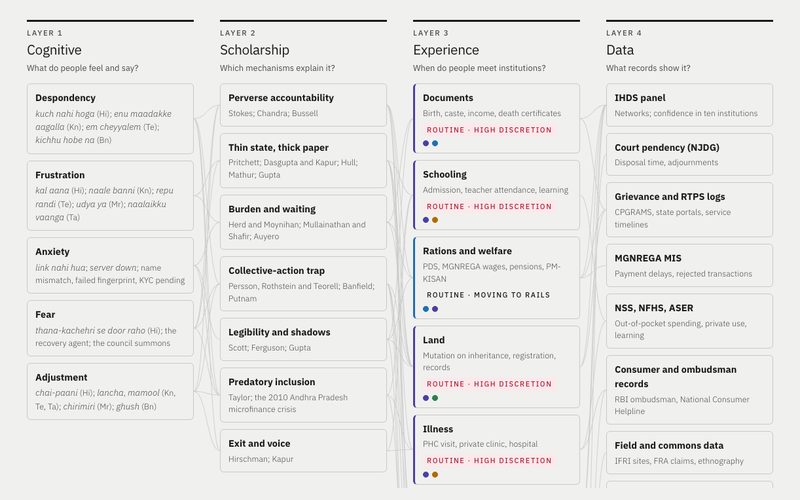 Map of Maps of Governance (MOM-G)
How people feel about governance, what scholarship explains, what they meet in practice and what records show, layer by layer.
Data: Tailwinds Working Paper 2026-02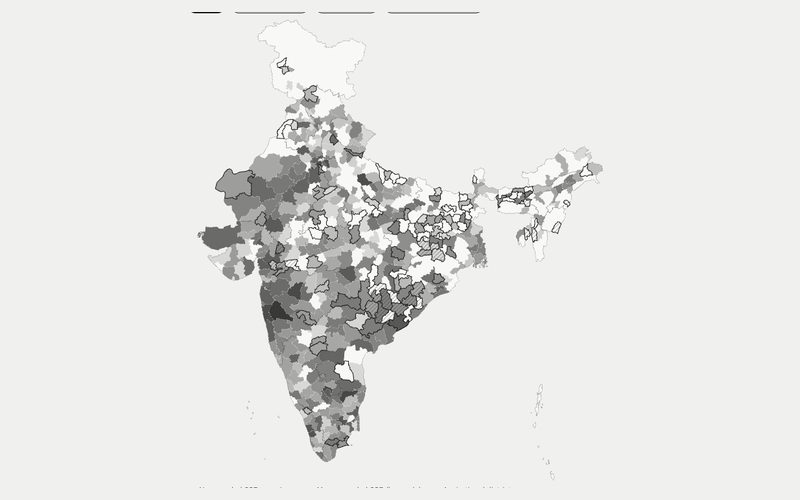 Where CSR lands
Where India's largest companies recorded their corporate social responsibility spending, district by district, and what the record cannot see.
Data: Ministry of Corporate Affairs CSR data via the India Data Portal, 2014 to 2020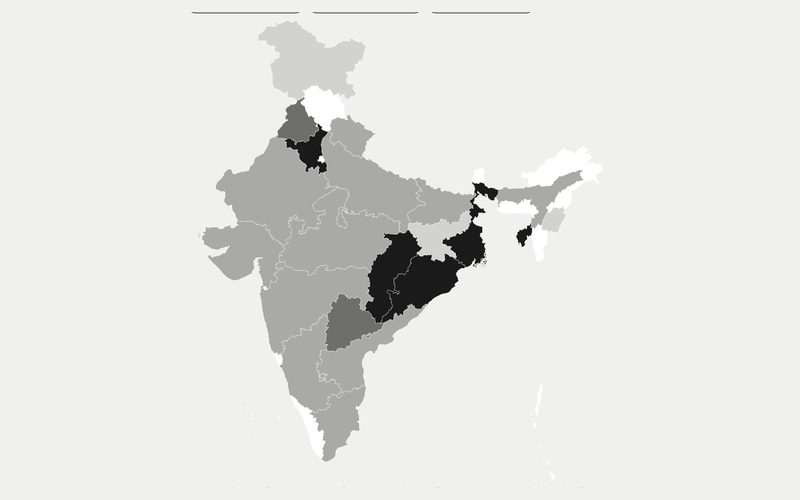 The tail inside the average
Farm-policy verdicts by state, walked down from the average farm household to the smallest and poorest.
Data: NSS 77th Round, Situation Assessment of Agricultural Households, 2018-19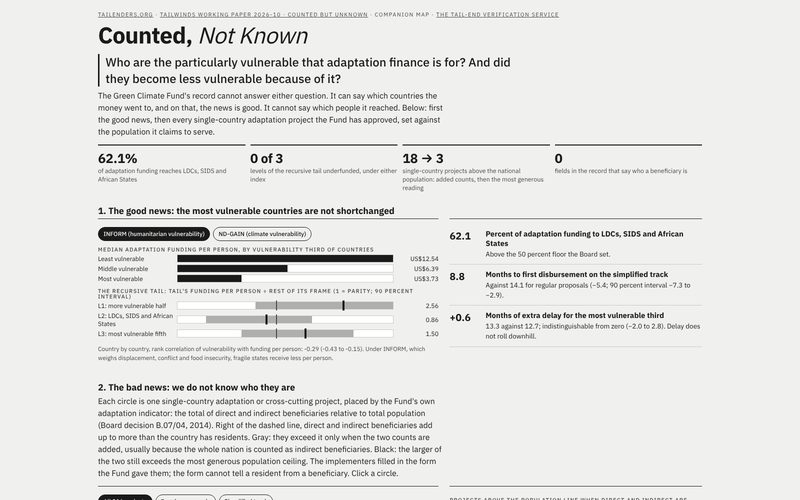 Counted but unknown
The Green Climate Fund's adaptation money by country and vulnerability, and every single-country project set against the population it claims to serve.
Data: Tailwinds Working Paper 2026-10; Green Climate Fund portfolio frozen 12 October 2026